
Bible verses about fitness get abused more than almost any other set of texts. Somebody wants a proof-text for the gym, so they grab a phrase, rip it out of its paragraph, and slap it on a tank top. Then somebody else, allergic to that, waves the whole subject off as carnal. Both are wrong. Scripture never gives you a workout plan. But it does give you a theology of the body serious enough to change how you train, eat, and steward the flesh God gave you for the mission.
So let’s do this honestly. No cherry-picking. We’ll read each passage in its own context, admit what it does not say, and then draw the application it actually earns.

What the Bible verses about fitness really do — and don’t — say
Here is the honest starting line. The Bible is not a fitness manual. Paul never programmed a squat. Daniel did not track macros. If you go looking for a divine command to bench press, you will leave empty-handed.
But that is not the same as silence. Scripture speaks constantly about the body — who owns it, what it’s for, and how discipline of the flesh serves the Kingdom. The best bible verses about fitness are not commands to exercise. They are convictions about stewardship that make neglecting your body hard to justify.
Read them that way and they stop being slogans. They start being weight.
That matters especially for men in ministry. A pastor cannot preach self-control he doesn’t practice. A missionary cannot serve for decades in a body he’s neglected into the ground. So this is not a side issue for the driven Christian man. It sits right where his calling meets his flesh — and Scripture has more to say there than most of us admit.
1 Timothy 4:8 — the verse everyone misquotes
Start here, because this is the one that gets twisted in both directions. Paul writes, “for while bodily training is of some value, godliness is of value in every way, as it holds promise for the present life and also for the life to come” (1 Timothy 4:8, ESV).
Gym Christians quote the first half and stop. Anti-fitness Christians quote the second half and stop. Both miss Paul’s actual move.
This is a lesser-to-greater argument. Paul does not dismiss bodily training. He says it has real value — just limited, temporary value compared to godliness, which pays out now and forever. The Greek word behind “training,” gymnasia, is where we get “gymnasium.” Paul assumes his readers know physical discipline firsthand.
So he is not anti-body. He is setting priorities straight. Train the body — it profits. Train the soul harder — it profits infinitely more. A missionary who is shredded but prayerless has the order backwards. A pastor who is faithful but falling apart physically has ignored the “some value” Paul plainly grants.
1 Corinthians 6:19-20 — the body is not yours
Now the ownership text. “Or do you not know that your body is a temple of the Holy Spirit within you, whom you have from God? You are not your own, for you were bought with a price. So glorify God in your body” (1 Corinthians 6:19-20, ESV).
Handle this one carefully, because context matters. Paul is confronting sexual immorality in Corinth, not launching a wellness campaign. The immediate application is purity.
But the principle he grounds it in is bigger than the problem he applies it to. Your body is not your possession to trash. It was bought. It houses the Spirit. And the command lands wide: glorify God in your body — not just in your sexuality.
You cannot honestly read “you are not your own” and then treat your health as nobody’s business. If the temple is God’s, then how you fuel it, rest it, and strengthen it is a stewardship question. Not a vanity one. That distinction is everything.
Think about what a temple actually was. Israel did not let the temple crumble, skip its maintenance, or fill it with junk. They guarded it, because of Who lived there. Paul takes that image and lays it on your ribcage. The Spirit does not dwell in a building anymore. He dwells in you.
That reframes the whole conversation. Neglecting your body is not a neutral lifestyle choice when the body is a dwelling place of God. It is poor stewardship of holy ground. Nobody is calling you to worship the temple. Scripture is calling you to keep it fit for the One inside it.

1 Corinthians 9:24-27 — Paul the athlete
This is the richest of the bible verses about fitness, and the most abused. Paul writes, “Do you not know that in a race all the runners run, but only one receives the prize? So run that you may obtain it. Every athlete exercises self-control in all things… I discipline my body and keep it under control, lest after preaching to others I myself should be disqualified” (1 Corinthians 9:24-27, ESV).
Be honest about the metaphor. Paul is not commanding a running program. He is describing gospel ministry through the picture of an athlete. The point is spiritual endurance, self-control, and finishing the race of faith without disqualification.
But notice what he assumes. Paul reaches for the athlete because athletic discipline preaches. Every serious competitor “exercises self-control in all things.” He denies himself now for a prize later. That is the shape of the Christian life, and Paul expects his readers to already respect it.
Here is the uncomfortable edge. Paul says, “I discipline my body and keep it under control.” The verb is violent — he beats it into submission. The undisciplined body is not neutral. Left unchecked, it disqualifies. So even as a metaphor, the text assumes a man who actually governs his flesh rather than obeying it. You cannot preach self-mastery while your appetite runs your life. That is the warning underneath the picture.
3 John 2 — a greeting, not a guarantee
Now the one prosperity preachers ruined. “Beloved, I pray that all may go well with you and that you may be in good health, as it goes well with your soul” (3 John 2, ESV).
Let’s be careful, because this verse is regularly abused. This is a first-century letter greeting — the standard health-and-wellness wish that opened personal letters in that world. John is not promising that faith guarantees a healthy body. He is not building a doctrine here at all.
So do not overload it. But do not ignore it either. John’s warm assumption is that a thriving soul and a well-cared-for body belong together. He wishes Gaius external health to match his spiritual health. The integration is instinctive to him. It should be to us.
Daniel 1 — conviction at the table
Finally, the narrative. “But Daniel resolved that he would not defile himself with the king’s food, or with the wine that he drank” (Daniel 1:8, ESV). Ten days on vegetables and water, and Daniel and his friends come out healthier and sharper than the men eating the royal spread.
Read it right. This is not a diet plan. Daniel’s issue was ceremonial defilement and covenant faithfulness in exile, not carbs. The point of the chapter is God’s blessing on conviction, not a meal prescription.
Still, the story is not accidental. Daniel drew a line at the table when the culture said indulge. He chose discipline for the sake of faithfulness. And God honored it. That pattern — conviction over convenience, even in what you eat — runs straight through Scripture. The application is not “eat like Daniel.” It is “let your convictions reach your fork.”
The world Paul trained in
To read these texts well, picture the world behind them. Paul wrote to a culture obsessed with the body. The Greek games were everywhere — Olympic, Isthmian, Nemean — and Corinth hosted the Isthmian games right in Paul’s backyard. Athletes trained for months under strict rules and diets.
So when Paul says “every athlete exercises self-control in all things,” his readers pictured real competitors they had watched. The metaphor landed because the discipline was visible. These men denied themselves food, sleep, and comfort for a pine wreath that withered in a week.
Paul’s point cuts deep here. If a man will punish his body that hard for a fading crown, how much more should a believer discipline himself for an imperishable one? He is not glorifying athletics. He is shaming spiritual laziness by comparison. Yet the comparison only works because he assumes physical discipline is worth respecting. That assumption still preaches.
But isn’t caring about the body just vanity?
Fair objection. A lot of “Christian fitness” really is vanity with a verse taped on. If your training exists to be seen, admired, or worshiped, the gym has become an idol. Scripture never blesses that.
But vanity and stewardship are not the same motive, even when they lift the same weight. Vanity asks, “How do I look?” Stewardship asks, “Am I ready for what God’s called me to carry?” One serves the mirror. The other serves the mission.
Test your heart, not your bench press. A man can be lean and vain. A man can also be strong and humble, training quietly so he can plant churches into his sixties without breaking down. The bible verses about fitness never bless the first man. They quietly commend the second.
The thread tying these bible verses about fitness together
Step back and the pattern is clear. Not one of these texts commands exercise. Every one of them assumes a man who governs his body for something bigger than himself.
Ownership from Corinthians. Priority from Timothy. Discipline from Paul’s race. Integration from John. Conviction from Daniel. Put them together and you get a theology, not a slogan. The body is God’s, it’s temporary, it’s meant to be disciplined, and its health is tied to your usefulness.
Paul says it plainest elsewhere: “whether you eat or drink, or whatever you do, do all to the glory of God” (1 Corinthians 10:31, ESV). That sweeps up your training too.
How to actually apply this without proof-texting
So what do you do Monday morning? Not build a religion out of the gym. Build a stewardship out of your body.
First, get the order right. Godliness first, always — bodily training is “of some value,” never the main thing. Second, treat your health as a Kingdom asset, not a hobby. A strong, rested, disciplined body serves longer and quits later. Third, let conviction reach the ordinary stuff: your plate, your sleep, your training week.
Then make it concrete. Pick two or three strength sessions a week and defend them like appointments. Put a hard line on the food and drink that wreck you, the way Daniel drew his. Guard your sleep as spiritual discipline, not laziness. None of this is heroic. It is just faithfulness applied to the body, done on repeat.
And keep checking the motive. The moment training becomes about the mirror, walk it back to the mission. Steward the temple; don’t worship it.
This is the whole idea behind the Ministry Athlete — you train not for the mirror but for the mission. It’s why our training exists in the first place, and why the app programs strength around the demands of ministry rather than aesthetics.
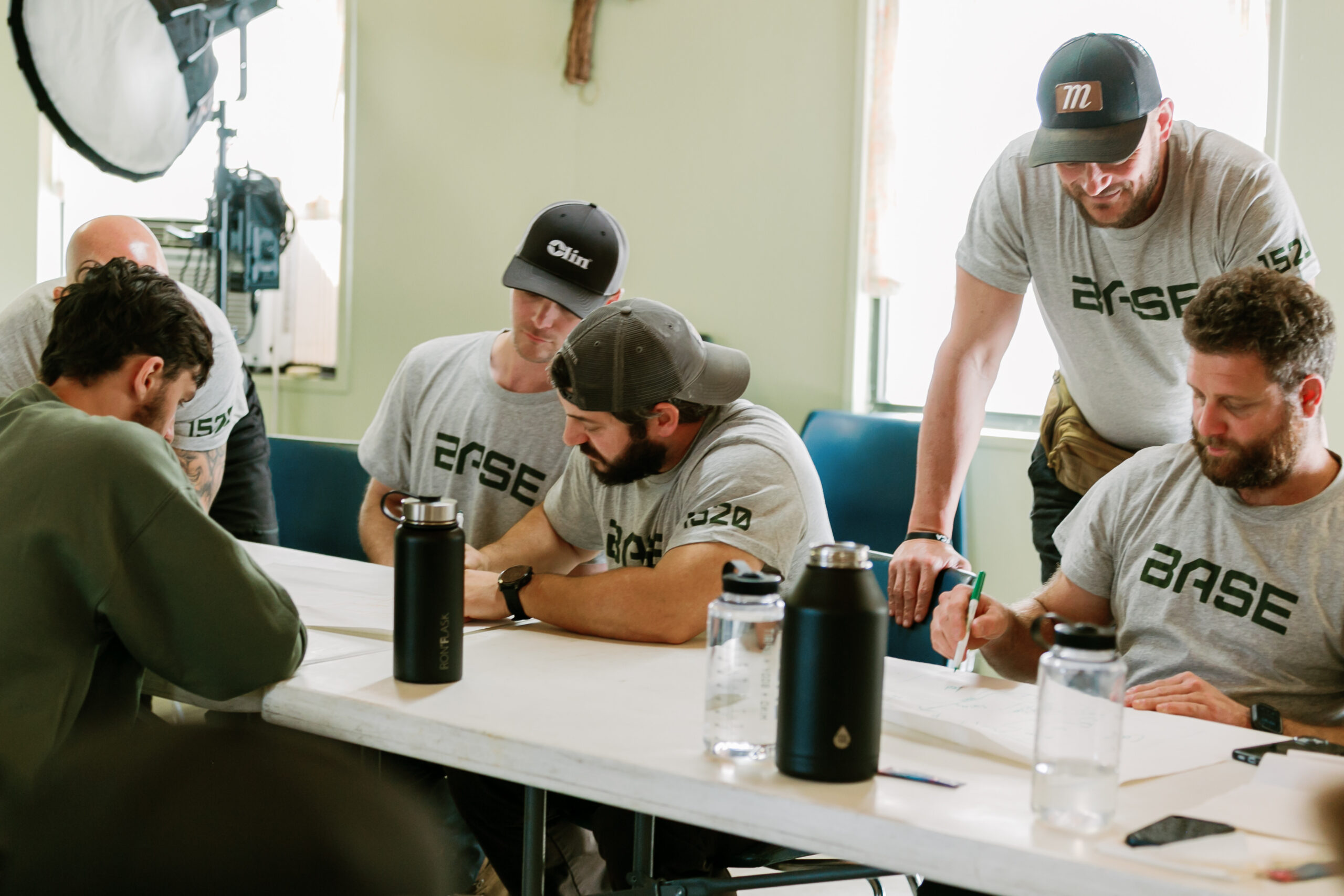
Train for the mission, not the mirror
The bible verses about fitness were never meant to make you obsessed with your body. They were meant to make you a faithful steward of it — so you can carry the gospel farther, longer, and without falling apart at mile twenty.
That is the whole point. Discipline the flesh so it serves the Commission instead of sabotaging it.
If you want an honest read on where your body actually stands for the work ahead, start with the Mission Readiness Check. Then, if you’re ready to train like it matters, start your app trial and put a program behind the conviction. The temple is God’s. Steward it like it.